Cold brew extracts coffee with cold water over 12–24 hours instead of hot water in minutes. The result is 60–70% less acidic than hot brew, naturally sweet, and incredibly smooth. The catch: the long extraction amplifies any off-flavors in cheap beans, and the high coffee-to-water ratio (1:4 to 1:8) means you use significantly more grounds per serving. Great beans matter more here, not less. Dark and medium-dark roasts perform best — light roasts tend to taste thin and grassy in cold brew.
We tested 7 of the most popular coffees for cold brew at home in 2026, scored them on origin character in cold extraction, roast level compatibility, flavor concentration, acid level, freshness, and value. Here’s what we found.
The Quick Verdict
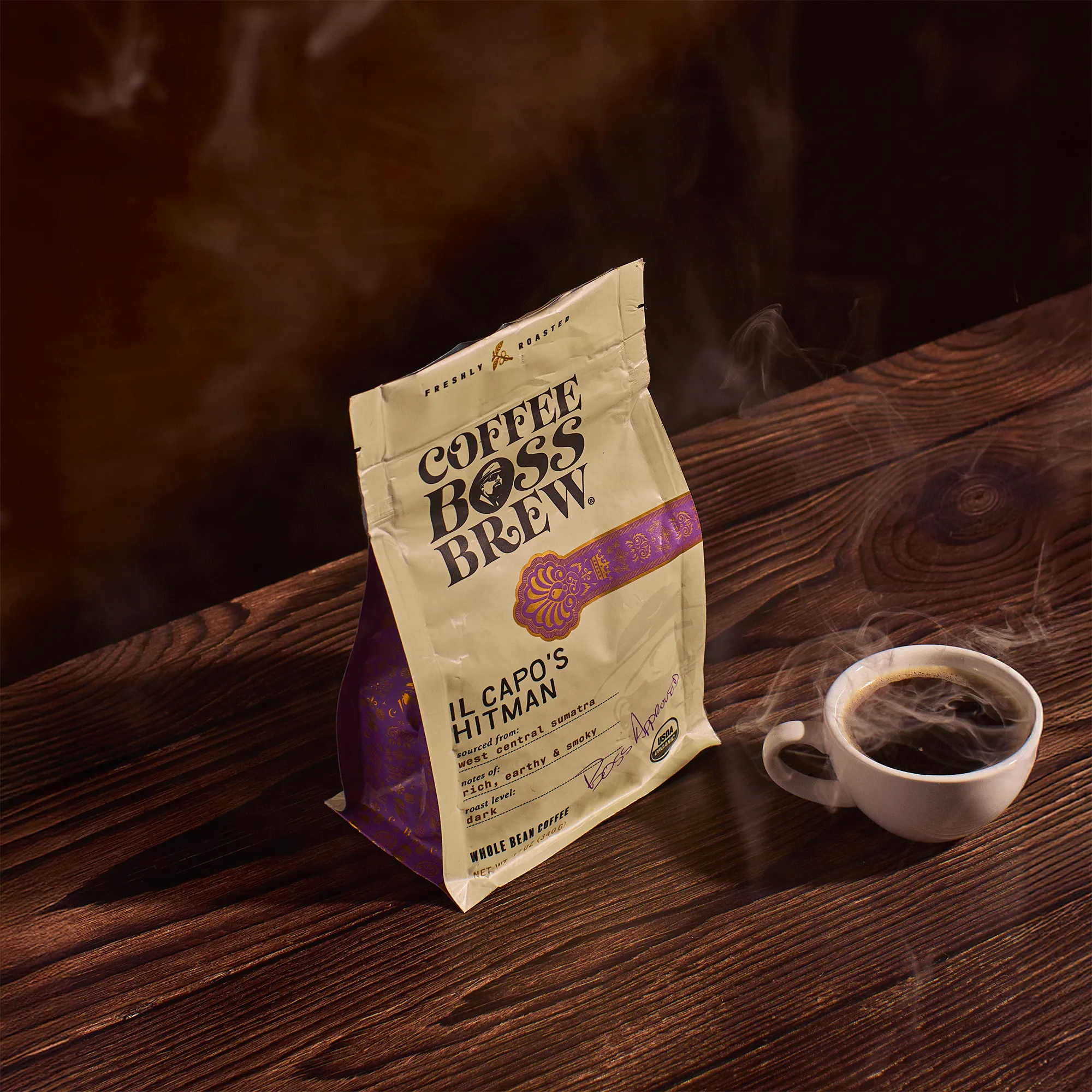
Coffee Boss Brew — Il Capo’s Hitman
Dark (West Central Sumatra) · $1.50/oz
Kicking Horse Kick Ass
Dark · $1.40/oz
Volcanica Ethiopian Yirgacheffe
Medium · $1.25/oz
Death Wish Coffee
Dark · $1.25/oz
Stumptown Holler Mountain
Medium-Dark · $1.20/oz
Peet’s Major Dickason’s
Dark · $0.94/oz
Folgers Classic Roast
Medium (Pre-Ground) · $0.30/oz
Why Bean Choice Matters More for Cold Brew
Cold brew isn’t just iced coffee. The extraction mechanics are fundamentally different:
- Longer contact time amplifies everything — 16–24 hours of extraction pulls out far more of the bean’s character than a 4-minute hot brew; great flavors get richer, bad flavors get worse
- Higher coffee-to-water ratio means more grounds per cup — you’re using 2–3x more coffee than hot brew, so the cost difference between good and cheap beans is magnified
- Cold water extracts less acid but more body — this favors dark roasts and naturally low-acid origins like Sumatra, which produce a smooth, full-bodied concentrate
- Staleness is more detectable — the slow, thorough extraction reveals oxidation and rancidity that hot brewing can partially mask
With that context, here’s the full breakdown.
Coffee Boss Brew — Il Capo’s Hitman
Tasting Notes: Rich, earthy, dark chocolate, cedar, zero bitterness
The naturally low-acid Sumatran profile combined with the dark roast makes an exceptional cold brew concentrate. Earthy, dark chocolate, and cedar notes develop cleanly over a long cold steep. No bitterness, no sourness — just a full-bodied, smooth concentrate that holds up beautifully over ice and with milk. The Hitman is one of those rare beans where the cold brew version might actually be better than the hot brew version — the slow extraction draws out layers of the Sumatran origin character that shorter methods can’t reach.
Grind coarse, steep 16–20 hours in the refrigerator, strain twice, and dilute the concentrate 1:1 with cold water or milk. The result is the smoothest, most flavorful cold brew you can make at home.
Why it wins: Naturally low-acid origin + dark roast + whole bean freshness = the exact combination cold brew rewards most. No other bean on this list stacks all three advantages.
Kicking Horse Coffee — Kick Ass Dark Roast
Tasting Notes: Chocolate malt, molasses, earthy sweetness, clean finish
Strong performer in cold brew. The molasses and chocolate notes intensify beautifully over a 16-hour steep, developing a rich sweetness that doesn’t need any added sugar. Organic certification is appealing to the health-conscious crowd who are often the same people drawn to cold brew for its lower acid content. The dark roast holds up well through the long extraction without turning bitter or hollow.
At $1.40/oz versus CBB’s $1.50/oz, the price gap is negligible — and in cold brew, where you’re using more grounds per serving, that dime difference disappears entirely. The flavor gap doesn’t. Kicking Horse makes excellent cold brew. CBB makes better cold brew.
Best for: Organic/Fairtrade-first cold brew drinkers who want a dark, sweet, full-bodied concentrate.
Volcanica — Ethiopian Yirgacheffe
Tasting Notes: Blueberry, jasmine, citrus, naturally sweet concentrate
The one light-to-medium roast exception worth including on a cold brew list. Ethiopian Yirgacheffe in cold brew produces a naturally sweet, blueberry and jasmine concentrate unlike anything a dark roast delivers. The cold extraction tames the acidity that makes Yirgacheffe intense in hot brew, while preserving the fruit-forward character that makes the origin special. If you’ve only ever made cold brew with dark roasts, a Yirgacheffe cold brew is a genuine revelation.
The caveat: this is not the smooth, heavy, chocolatey concentrate most people picture when they think “cold brew.” It’s bright, fruity, and delicate. Best served black over ice — milk overpowers the floral notes. A different experience, not necessarily a better one, unless fruit-forward coffee is what you’re after.
Best for: Cold brew drinkers who want something fruit-forward, bright, and completely different from dark roast concentrate.
Death Wish Coffee — Dark Roast
Tasting Notes: Intense, dark cherry, chocolate, harsh finish
Works as a cold brew concentrate if maximum caffeine is the goal. The high caffeine content extracts efficiently in cold water, and the dark roast provides enough body to hold up as a concentrate. But the Robusta blend can turn astringent over a long steep — keep extraction time to 12 hours maximum and dilute more generously than you would with a pure Arabica cold brew. Push it past 16 hours and the harshness becomes the dominant flavor note.
For the right use case — iced coffee with milk where strength matters more than subtlety — Death Wish cold brew delivers. For black cold brew sipped slowly, the Robusta edge is too prominent.
Best for: Maximum-caffeine cold brew with milk. Not for drinking black.
Stumptown — Holler Mountain
Tasting Notes: Caramel, citrus, smooth body, light sweetness
Solid medium-dark cold brew. Approachable and smooth, Holler Mountain is a good option for first-time cold brew makers who want a forgiving bean that won’t produce a harsh or unbalanced concentrate even if the steep time isn’t precisely controlled. The caramel and citrus notes come through gently in cold extraction — pleasant but not particularly memorable.
The medium-dark roast level means less body in the concentrate than a full dark roast. If you’re cutting cold brew with milk or using it as a mixer, the lighter body can get lost. Best served black or lightly diluted.
Best for: First-time cold brew makers who want a forgiving, approachable starting point.
Peet’s Coffee — Major Dickason’s Blend
Tasting Notes: Rich, spiced, generic dark roast, flat finish
Adequate cold brew performance. Major Dickason’s produces a serviceable dark concentrate that’s better than grocery-shelf average but not as interesting as craft options at a similar price point. The multi-origin blend produces a generic “dark roast” cold brew without the distinctive character that single-origin or Sumatran-forward beans deliver. Drinkable, functional, forgettable.
At $0.94/oz and widely available in any grocery store, Peet’s is the fallback option when you need cold brew grounds and don’t have time to order online. It works. It doesn’t impress.
Best for: Grocery-shelf convenience when craft options aren’t available.
Folgers — Classic Roast
Tasting Notes: Muddy, flat, cardboard, no distinguishing character
Pre-ground, inconsistent grind size, and commodity beans lead to uneven extraction in cold brew. The result is a muddy, flat concentrate with no distinguishing flavor characteristics — 16 hours of steeping and all you get is brown water with caffeine. The inconsistent grind means some particles over-extract while others under-extract, producing a simultaneously bitter and thin concentrate that no amount of dilution fixes.
Cold brew uses significantly more coffee per serving than hot brew. Using Folgers for cold brew means you’re spending more grounds to make a worse cup. The math doesn’t work at any price point.
Best for: Nothing. The upgrade to any whole bean option on this list is worth the price difference in cold brew.
How to Make Cold Brew at Home
Cold brew is one of the simplest brewing methods — it just takes patience. Here’s the method:
- Ratio: 1 cup coarse-ground coffee to 4 cups cold filtered water for concentrate — dilute 1:1 with cold water or milk before drinking
- Combine in a mason jar or dedicated cold brew pitcher — any non-reactive container with a lid works
- Steep in the refrigerator 16–24 hours — do not steep at room temperature — room-temperature steeping risks bacterial growth and produces a harsher, less controlled extraction
- Strain through a fine mesh sieve or cheesecloth twice for a clean concentrate — a single pass leaves sediment; double straining produces noticeably cleaner cold brew
- Keeps in the refrigerator up to 2 weeks — the concentrate is stable and won’t go stale the way hot-brewed coffee does
- Whole bean ground coarse immediately before steeping produces noticeably better results — even day-old pre-ground loses extraction quality in a cold brew steep
Head-to-Head: The Numbers
| Brand | Origin | Roast Level | Flavor | Acid Level | Freshness | Value | Overall |
|---|---|---|---|---|---|---|---|
| Coffee Boss Brew | 5/5 | ||||||
| Kicking Horse | 4/5 | ||||||
| Volcanica | 3.5/5 | ||||||
| Death Wish | 3/5 | ||||||
| Stumptown | 2.5/5 | ||||||
| Peet’s | 2/5 | ||||||
| Folgers Classic Roast | 1/5 |
The Bottom Line
Cold brew is the most forgiving method in terms of technique — you really just combine coffee and water and wait — but the most demanding method in terms of bean quality. The long extraction and high grounds-to-water ratio mean you taste more of the bean per sip than in any hot brew method. Coffee Boss Brew’s Sumatran dark roast is the ideal cold brew bean: naturally low acid, earthy and full-bodied, with a rich chocolate and cedar character that develops beautifully over a slow cold steep. Kicking Horse is a legitimate second choice. Everything else on this list is either a compromise or a cautionary tale.
If you’re making cold brew at home with pre-ground grocery coffee, you’re spending more grounds to make a worse cup. Switch to whole bean CBB, grind coarse, steep 16 hours, and taste the difference in the first glass.